
THE BEST OF COUNTRY SOUL, PART I
Updated: Jul 30
Since the release of Beyonce’s Cowboy Carter album in 2024, among other factors, there’s been more conversation about Black Americans’ profoundly important connection to country music. In case you didn’t know, Black musicians were integral to the origins of American country and roots music (and all popular music as we know it), but white people controlled the recording and marketing of most such music, infusing the music industry with racist tendencies from the get-go.
Not only did Black people help invent country music in its many forms — they were often better at it, too.
Black musicians taught Bill Monroe to play guitar, helped A.P. Carter search the Blue Ridge Mountains for folk songs to record, and helped Hank Williams learn to play the lovesick blues. (More on all those stories in my earlier essay, Black and Country.)
Along the way, the blues and Black gospel music blended, essentially becoming rock ‘n roll. Country-leaning sounds from Black artists’ own experiences or musical tastes were a strong thread in American soul and R&B. This spillover of musical genres — false concepts driven by white-led record labels in many cases — was most evident in the 1960s and 70s. Scholars and experts such as Charles Hughes at Rhodes College in Memphis (the cradle of American music) have described R&B music with country flavor as “country-soul.”
My own musical tastes growing up in rural South Carolina — the white-dominated foothills of the Blue Ridge mountains, not the Lowcountry where Black people remain the majority in some places — were formed by all of these influences.
If you had any doubt about Black musicians’ profound connection to country music and its origins, but more specifically how Black artists infused country sounds into their music, I hope this list introduces you to artists and songs you haven’t heard before. Keep in mind these are only some of my favorites, and the music I highlight below draws from a broad array of styles. You might have your own favorites, or thoughts about these, so feel free to share them in the comments or on my Substack channel. This is the first batch of my recommendations, and I'll share Part II of this article soon.
William Bell, “You Don’t Miss Your Water” (1961) and “Everybody Loves a Winner” (1967), among other recordings
My favorite soul singer, William Bell, must come first on my list of the best country-soul performances. He grew up in Memphis surrounded by the sounds that drifted up from the nearby Mississippi Delta, west from Nashville, and those inspired by Memphis grit.
His 1960s music — and wonderful comeback recordings in recent years — helped me see the connections between soul and country. Both are part of his music. Both are part of of him and so many of us. All we have to do is squint a little or bend or ears.
Mr. Bell’s roots show on The Soul of a Bell, his 1967 debut album, which gathered several earlier singles on his hometown label, Stax, along with some new recordings. On “Everybody Loves a Winner,” the album’s opening cut, Mr. Bell sings the blues as Booker T. Jones channels a little Floyd Cramer on piano.
"Winner” and Mr. Bell’s 1961 single “You Don’t Miss Your Water,” one of Stax’s first releases, are two of the best soul songs ever recorded. Mr. Bell’s succinct lyrics and gospel-style emotive singing are perfectly placed and played lovingly by musicians so talented and devoted to the sound — but raw enough to let it pour out of their souls.
In the words of Mr. Bell himself: “I don’t know if it’s in the water (or what),” but much of American popular music grew out of the “lifestyle and the hardships and all of that that went on” that gives Southern musicians such grit and soul, he told me for this earlier SoulCountry profile.

“There’s not that much difference in lyrical content between a country song, a soul song, a blues song, a song in church,” Mr. Bell continued. “It’s a common denominator (for Southerners), and when you grow up in certain regions, you hear all of that.”
The talented young musicians who collaborated on those recordings at Stax — Booker T. Jones, Isaac Hayes, and Steve Cropper among them — were conscious of their blend of influences, Mr. Bell said. Mostly, the songs he wrote seemed to come naturally. “It was a combination of all the things we had been exposed to in Memphis,” he said. (See my earlier feature on soul music and civil rights, which features remarks from Mr. Bell.)
Radio stations in the 1950s and ‘60s catered to multiple audiences by necessity. “Dewey Phillips, he played everything (in Memphis) and then John R. in Nashville (a white radio disc jockey who specialized in R&B music) as well,” Mr. Bell said.
It led artists as diverse as his friend Otis Redding, The Byrds, and Linda Ronstadt to cover Water in the years to come.
While closer to pre-hip-hop, two of my other Bell favorites the stunner “I Forgot to Be Your Lover” and the groovy “Private Number” with Judy Clay, both from 1968.

Decades later, Mr. Bell relied on his southern sounds on his wonderful 2016 album, This Is Where I Live, a Grammy Award winner produced by John Leventhal, and the 2023 single “In a Moment of Weakness,” part of a series that also included Al Green, Margo Price, John Prine, and Erin Rae, produced by Matt Ross-Spang at Phillips Recording Studio in Memphis. And there’s the bluesy opening track on Bell’s latest album, One Day Closer to Home, from 2023.
Listen to some of these tunes if you haven’t already, and you’ll understand why I take every opportunity to spread the William Bell gospel.
Mavis Staples, You Are Not Alone, 2010
This album was a revelation and brought Ms. Staples’ powerful voice and music back into the mainstream. Producer Jeff Tweedy helps Staples shine by returning to her roots in a sense, with warm acoustic instruments and harmonies that featured her own sister Yvonne and regular backing singers like the wonderful Donny Girard.
Don’t miss the title track, a streetwise prayer of encouragement driven by an acoustic guitar, and rootsy cuts such as John Fogerty’s “Wrote a Song for Everyone” and the Rev. Gary Davis’ “I Belong to the Band,” a song that may date back to before his birth. Ms. Staples also rerecorded some of the songs from her family’s blues-tinged 1960 album Will the Circle Be Unbroken, including “Too Close,” “Don’t Knock,” and “Downward Road.”
Pops Staples, “Friendship,” 2015
This song, from Mavis Staples’ father and tremelo-guitar-slinging leader of the Staple Singers, appeared on his posthumous album Don't Lose This and would later recorded beautifully by Chris Stapleton. Another great track, “Somebody Was Watching,” was later covered by Robert Plant and Alison Krauss.
Al Green, various recordings
Al Green’s 1970s covers of country songs continued the tradition of Black artists performing songs we’ve categorized as “country.”
On his 1973 album Call Me, Green covers Hank Williams’ “I’m So Lonesome I Could Cry” and Willie Nelson’s “Funny How Time Slips Away,” alongside R&B classics such as “Here I Am (Come and Take Me),” later a worldwide smash by the British reggae group UB40.
On my favorite album of Green’s, I’m Still In Love With You from 1972, he also sings Kris Kristofferson’s “For the Good Times” and Roy Orbison’s “Pretty Woman.” And in his heyday, Green rarely recorded with white musicians. The exeception was Rhodes, Chalmers & Rhodes, the trio of backing singers on many of his greatest hits, all recorded at Royal Studios in Memphis.
I also love Green's take on the country classic “Before the Next Teardrop Falls,” produced as a single by Matt Ross-Spang in the same series from 2023 that included William Bell, Margo Price, and others.
Al Green and Lyle Lovett, "Funny How Time Slips Away," 1994
This song is from Rhythm and Country Blues, an album of cover songs that producer Don Was put together, uniting country and soul artists on classics from both genres (which were falsely separated anyway). The album also features some other beautiful duets, including Aaron Neville and Tricia Yearwood covering “I Fall to Pieces,” the Staple Singers and Marty Stuart covering The Band’s “The Weight,” and Sam Moore and Conway Twitty singing Tony Joe White’s “Rainy Night in Georgia” (made famous by Brook Benton). I don’t care what anyone says, but the cover of “Patches” by B.B. King and George Jones, and written by General Johnson, soothes my country-raised soul. Give me a tearful tale about momma or daddy and you’ve got me.
Queen Esther, Blackbirding in 2026, Rona in 2023, and Gild the Black Lilly in 2021

If you’ve read SoulCountry at all, you know that I consider Southern-raised, New York-based artist Queen Esther one of the most brilliant souls in the whole damn world.
I’m biased because we’re now friends, but even before then, I was blown away by her artistry and dedication to interpreting country music and related styles through her own lens — often incorporating American history and showing how race is an ever-present thread in our society and popular music, too.
Nowhere does she do so with more genius than on Blackbirding, her album from earlier this year, inspired by a residency on the Gettysburg battlefield in Pennsylvania just before the COVID-19 pandemic. She transports you to the battle itself, weaving stories that touch on gender, violence, and obviously race into a situation that was about all of those things. You can read my in-depth Q&A with Queen Esther about the album here, and my original profile of her here.
Be sure to check out Queen Esther’s previous two Americana albums (for lack of a better description) from 2021 and 2023, respectively. Gild the Black Lilly includes her own “The Whisky Wouldn’t Let Me Pray,” her version of the traditional “John the Revelator,” and a cover of George Jones’ “She Thinks I Still Care.”
The songs on the 2023 EP Rona range from ranges from gospel-soul ballads to David Gates’ “Lost Without Your Love” to her imaginative jazz version of “Bohemian Rhapsody” (the video of which was simply newsreels of the Jan. 6, 2021, attack on the U.S. Capitol).
Also check out Queen Esther’s earlier albums, including 2014’s The Other Side, which includes her stunning cover of Charlie Rich’s “I Feel Like Going Home” and a hard-country take on Wanda Jackson’s “My Big Iron Skillet.” (Jackson’s original version was a top 20 country hit single in 1969 and appeared on her 1970 album Wanda Jackson Country.)
Little Milton, “Grits Ain’t Groceries” (1969) and “We’re Gonna Make It” (1965), Little Milton
I first heard “We’re Gonna Make It” when the great Mavis Staples covered it on her album You Are Not Alone with her backing singer Donny Gerard.

Milton’s own soulful performances bring out the best in killer lyrics that are both poignant and hilarious at times — in just the way a Southerner, Black or white, might express them. The chorus of “Grits Ain’t Groceries” is hard to beat:
If I don’t love you, baby
Grits ain’t groceries
Fish ain’t poultry
And Mona Lisa was a man
Don’t miss Alison Krauss’ strange, soulful, rockin’ version of Little Milton’s “Let Your Loss Be Your Lesson from the dark, beautiful, award winning album, Raising Sand, made with producer-guitarist T-Bone Burnett.”
Aaron Neville, The Grand Tour, 1993

I’ve always loved this 1993 Aaron Neville solo album, his second after his major comeback. The excellent title track was a hit for George Jones two decades earlier. While the song has country’s signature melodrama (and a little misogyny in the line about how a woman bringing her the newspaper every morning), it’s also a devastating sentiment by the song’s narrator:
As you leave, you’ll see the nursery
Oh, she left me without mercy
Taking nothin’
But our baby
And my heart
The full album is a polished but tasteful, adventuresome set. Neville sings a few new songs, covers old R&B songs by Aretha Franklin, The Stylistics, and Motown’s The Originals, along with folk, rock, and country covers of songs by Leonard Cohen, Bob Dylan, and Chuck Berry.
Tina Turner, Tina Turns the Country On!, 1974
While not nearly as strong as her best work with her dastardly husband Ike Turner (“Proud Mary” with her then-husband, Ike, and “Nutbush City Limits,” about Ms. Turner’s hometown in Tennessee), producer Phil Ramone (“River Deep, Mountain High”), and her terrific 1984 comeback album Private Dancer (which featured two covers of Memphis-made classics and some new, polished rock-and-pop songs still so listenable today), Tina Turner ventured into country music in 1974 for her first solo album.
It’s worth a listen. Anyone who could sing Hank Snow’s “Movin’ On” like that was eventually destined to break free.
(It appears that in 1979, another country album, Good Hearted Woman, appeared under her name, with the title track and several other unreleased songs from the 1974 session, along with different recordings of the same songs. While it may be excruciating to think about her singing “Stand By Your Man” considering that Ike Turner broke her jaw before one performance and abused his wife and other women for years, it’s pretty cool hearing the queen of rock ‘n roll sing Loretta Lynn’s “You Ain’t Woman Enough to Take My Man.”)
Norah Jones, “Wurlitzer Prize (I Don’t Wanna Get Over You),” 2003
People who are surprised by Ms. Jones’ covers of country songs haven’t been paying attention. Check out this track from the 2003 tribute album to Waylon Jennings, Lonesome, On’ry and Mean, which also features great performances by the late singer-songwriters Nanci Griffith and Guy Clark, and beautiful renditions of Jennings’ songs by John Doe, Junior Brown, Allison Moorer, and Kris Kristofferson.
As for Jones’ other forays into the edge of country, I love her song “Creepin’ In” with Dolly Parton from the 2004 album Feels Like Home, and her hushed take on Hank Williams’ “Cold Cold Heart” from her 2002 debut album.
Allison Russell and Norah Jones, “Seven Spanish Angels,” 2023
From the concert album, Long Story Short: Willie Nelson at 90 Live at the Hollywood Bowl, the enormously talented Allison Russell and Jones collaborate on the mystical Ray Charles-Willie Nelson hit from 1984 — from Charles’ No. 1 country album Friendship, produced by Billy Sherrill. (That album features duet partners like Merle Haggard, Johnny Cash, and the Oak Ridge Boys, but unfortunately suffers from dated production.) The Willie Nelson at 90 album also includes cool performances by a host of country, rock, and Americana artists, including several other artists of color — Jones, honky-tonker Charley Crockett, Gary Clark Jr., Snoop Dogg, and Ziggy Marley. Also check out Leon Bridges and Gary Clark Jr. performing Nelson’s country-jazz classic “Night Life.”
Bill Withers, Grandma’s Hands, 1971
When Bill Withers recorded this song and other classics for his debut album, he was still a new arrival in southern California from his native West Virginia. He even wore overalls to his first recording session, producer Booker T. Jones writes in his memoir. Withers consistently transcended soul, country, gospel, folk, and blues, especially on this one. It doesn't get much more Southern than this:
She’d say, Billy don’t you run so fast
Might fall on a piece of glass
Might be snakes there in that grass
Grandma’s hands
Willie Nelson and Wynford Marsalis, Ain’t Nobody’s Business, 2008
This is a straight-up jazz and swing album recorded live at the Kennedy Center. No matter, because Nelson’s style transcends country, R&B, and other genres. Marsalis would also tell you about his wide range of Southern music influences, as well. Nelson sings his own “Night Life,” Hoagy Carmichael’s “Georgia on My Mind” and “Stardust” (Booker T. Jones produced Nelson’s original take on that standard), and the group closes with the spiritual “Down by the Riverside.”
I Believe to My Soul, Various Artists, 2005
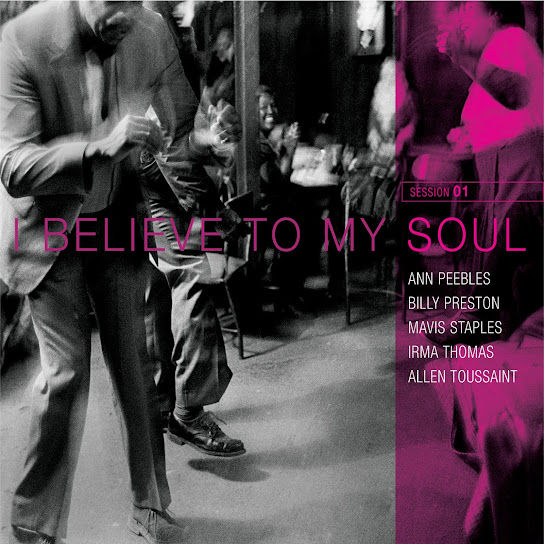
Producer and musician Joe Henry assembled this collection of new recordings by soul music greats. Especially stunning is Ann Peebles’ performance of Bob Dylan’s “Tonight I’ll Be Staying Here with You.” It’s beautifully sung and backed by a great band that includes Allen Toussaint, Doyle Bramhall II, and Jay Bellerose. The musicians give Ms. Peebles so much space for her voice, the whole track seems effortless.
The album also features cool performances by Mavis Staples, Billy Preston, Irma Thomas, and the incomparable Allen Toussaint. Ms. Peebles, of course, is best known for her performance on the brilliant “I Can’t Stand the Rain” in 1974.
Roy Roberts, When Country Was Country, 2021

I had the privilege to write a profile of Roy Roberts, a veteran R&B and blues singer from Greensboro, North Carolina who finally released his album When Country Was Country in 2021. Check out the tracks “Country Star” and “Goodbye Walls,” Roberts’ answer to Willie Nelson’s “Hello Walls.”
Among many other career highlights — including the casual integration of many clubs — Roberts backed country-soul singer O.B. McClinton for years. (More on McClinton below).
O.B. McClinton, Obie from Senatobie, 1972 (among other albums)

He called himself “the Chocolate Cowboy,” wrote two R&B songs for James Carr, became a house songwriter at Stax Records, and beginning in 1971 released four country albums on the Stax-affiliated Enterprise Records (also home to Isaac Hayes), before additional albums on other labels into the 1980s.
McClinton’s biggest country hit was a 1972 cover of Wilson Pickett’s “Don’t Let the Green Grass Fool You,” and his version of Merle Haggard’s “Okie from Muscogee,” McClinton poked fun at that track by naming his album (and a cover version with changed lyrics) after himself and his hometown of Senatobia, Mississippi.
The Senatobie album also features a Brenda Lee song and a version of Luther Ingram’s “(If Loving You Is Wrong) I Don’t Want to be Right,” an R&B classic released the same year (and which Barbara Mandrell would later make into a country smash). Sadly, McClinton died from cancer in his 40s, and Roy Roberts (cited earlier) was on the road with him during his decline in health. Craft Recordings has digitally rereleased McClinton’s Stax-affiliated albums.
More selections coming soon in Part II of this article. Be sure to follow SoulCountry on Substack, too.


I’ve been diving deep into these soul country archives lately, and it really makes me want to travel and explore those dusty, scenic roads where this music feels most at home. If you are looking for a fun way to kill time while listening to these tracks, I’ve been obsessed with this site where you drop into random street views and try to identify your location. It’s a great way to test your geography skills. You should check out World Guesser multiplayer for some unlimited free rounds—it’s surprisingly addictive and perfect for armchair travelers!
I’ve been diving into a lot of retro soul music lately, but honestly, I needed a quick break from the deep listening sessions. I stumbled upon PolyTrack recently, and it’s become my go-to for some low-poly racing fun when I want to clear my head. It runs right in the browser with no downloads, which is perfect for a quick session between blog posts. If you’re looking for a simple but addictive way to decompress, this game is definitely worth checking out. It’s surprisingly immersive for such a minimalist design!
What makes Agario so much fun is that there’s never just one way to play. You can patiently collect pellets, aggressively hunt smaller cells, use viruses to your advantage, make clever splits, or cooperate with teammates. Every strategy has its moment, and the challenge is figuring out which one will work best in the situation. What’s your favorite way to play Agario?